The 2018 Sheffield City
Centre masterplan, outlining ambitions for the next decade, has this
to say about the Milton St area of Sheffield. "Significant
opportunities for family or other non-student housing exist in the
southern part of the (Devonshire) Quarter around Milton Street where
the Council has significant land ownership. Here is also a cluster of
attractive, larger, listed metal trades factories including Eye
Witness and Beehive Works awaiting new uses ...."�.
At the same time the Council's conservation officers have expressed concern about
buildings in the same area. On Milton Street itself two cutlery
factories have survived into the 21st century. Eye Witness
Works is being developed by Manchester firm Capital and Centric into
a "£25m complex of 100 apartments". The adjacent Beehive Works,
which still functions as a small studio/workshop complex (much as it
originally did for the various metal trades that grew up around the
cutlery industry.) is Grade 2* listed and is deemed 'at risk'
although Council officer Zoe Mair admits "That's likely to have
some grant aid from Historic England"� so might come off the 'at
risk' register quite quickly.
This former cutlery
working area was partially redeveloped in the 1960s and then again in
the 1990's. Then it was regarded as part of the area of Broomhall
whereas now, tightly clamped to the west by the busy Hanover Way ring
road, it tends to be described as part of the Devonshire Quarter
sector of the City Centre.
A few years ago I wrote
a short piece for the Our Broomhall project remembering the time I
lived in that area of Sheffield and accompanying it with a selection
of my photographs from the 1980s.
http://www.ourbroomhall.org.uk/
Although the text and the
photographs largely refer to the area of terraced housing on the west
side of Hanover Way it also talks about the Broomhall flats and
Viners cutlery factory which, now demolished and the sites
redeveloped, sat in what is currently regarded as the city centre.
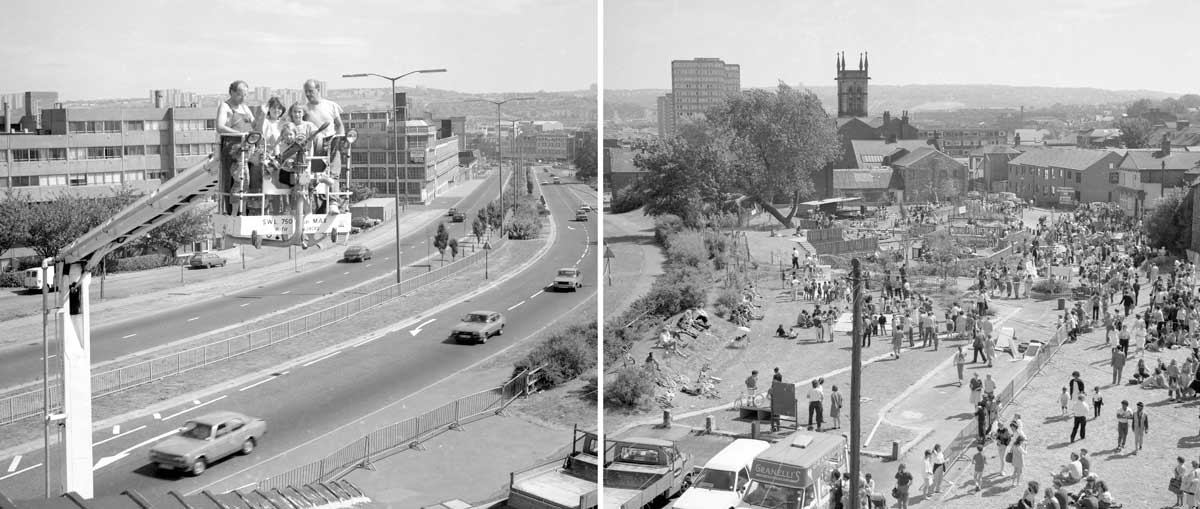 |
| Looking down Hanover Way in 1983 during Broomhall Carnival The right hand half of the image shows the western side of Broomhall with St.Silas' church prominent. The far left of the image shows Broomhall Flats and, to the right of the cherry picker, Viners cutlery factory. |
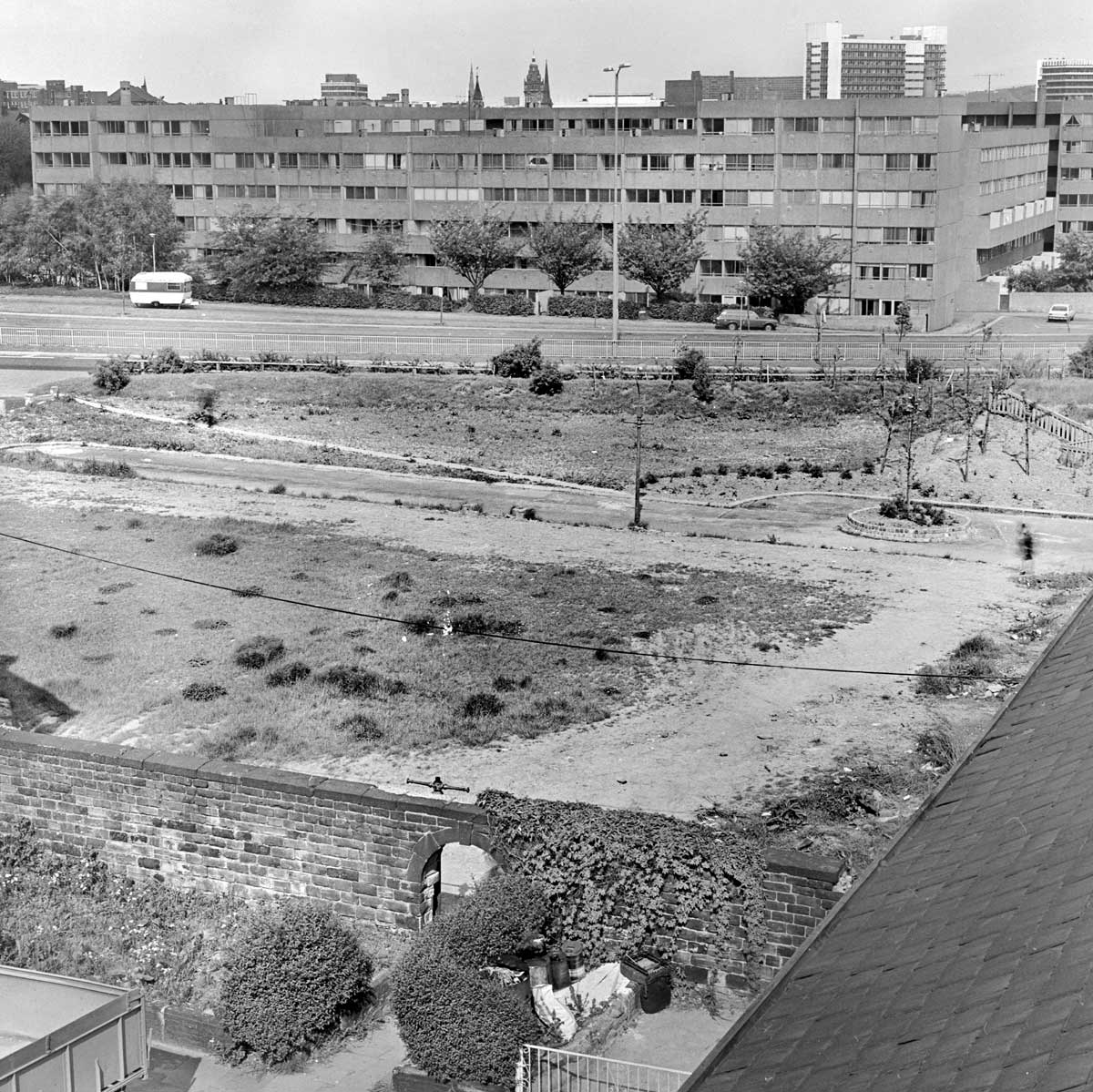 |
| Looking across Hanover Way to the Broomhall Flats 1982 |
I publish the original
text here without amendment along with a few of the photographs that
accompanied it. They are followed by recent photographs of the
housing that replaced the flats and the industrial buildings of the
Milton Street area.
I rented a room in
Broomhall for a couple of spells in the 1970 s though I wasn't taking
photographs at the time, and these pictures are from visits made in
the early and mid 80s. I've not been back to Broomhall much in the
intervening 30-odd years though I often drive along the
dual-carriageway (Hanover Way) that runs along the eastern edge of
the area. I first lived there when the terraced houses that form part
of Broomhall had demolition orders on them. However, it was possible
to buy a house cheaply on the understanding that one day a bulldozer
would turn up at your door- and you would have no redress when it
knocked your house down. Landlords and graduate students with a bit
of cash bought up the houses. The demolition orders were later lifted
and improvement grants became available.
There is always a
difference between an area marked on a map and same area modelled in
the heads of its residents. Broomhall according to, say, Pevsner,
lies to the west of Upper Hanover Street, land that in medieval times
was owned by the deWickersley family of Broom Hall. To the east,
towards the modern town centre were the Fitzwilliam lands that in the
19th C were beginning to be developed for industrial use,
principally the cutlery and metal trades. If I had to draw a mental
map of Broomhall when I lived there it would largely feature the
terraced housing south from the University as far as Hanover Square,
Mudfords and the Hanover pub..To the east, via Sid's garage on the
corner of Upper Hanover Street and Broomspring Lane, was Springfield
Junior School where many of the local children went, and the
Broomhall Flats. They were system-built deck access flats that had
problems with the build quality from the start, the local Tenants
Association constantly having to protest the living conditions of
some of the homes.
Beyond the flats but
still on my mental map of Broomhall was the long gone Raven public
house on Fitzwilliam Street. Southwards was the cutlery area
dominated by the factory and warehousing of Viners, the biggest
cutlery firm in Sheffield. South of Hanover Square were the two tower
blocks and maisonettes also known as Broomhall flats but which to me
always belonged to London Road and Sharrow, while to the west the
villas on the roads that stretched down to Ecclesall Rd were always
some variant on 'collegiate' a distinction later enthusiastically
adopted by estate agents keen to distance themselves from the darker
goings on in Broomhall.
When I lived there it
was a place of...well, I liked it and, as always, it's the good
people you know that counts. It was a kind of raggedy-arsed bohemia ,
but there was also poverty, drugs and prostitution. But the drugs
seemed to be mostly cannabis of dubious quality (if you wanted the
stronger hallucinogens you had to stroll the few hundred yards up to
the Students Union) and the working girls seemed quite relaxed. This
changed a few years later when the area became part of the stalking
ground of the Yorkshire Ripper . From then on the tension inevitably
mounted on the streets after dark and the kerb crawling motorists
took on an extra threat.
These days, so I'm
told, the girls are long gone but down on the flats the drugs are
harder and there is violence between the gangs. In the streets where
I used to live the house prices are such that I couldn't afford to
buy one because there has been an equal process of gentrification
both in terms of owner-occupiers and lettings to denizens of the
nearby academic institutions.
By the early 1980 s
economic and social forces were in play that changed the face of
Sheffield. One, much recorded, was the closure of many of the city's
traditional industries. This narrative tends to focus on the steel
industry of the Don Valley but the local cutlery industry had been
ailing for a while and the 80s finished off the less healthy
survivors. Viners' cutlery business had expanded greatly in the 1950s
and 1960s and by the 70s they were importing blanks from one of their
far east subsiduaries and stamping them 'Sheffield'. This doubtful
practice didn't save them and they went out of business in 1982. The
other process that changed the townscape was the demolition of a
number of the large public housing projects from two decades earlier.
The deck-access Broomhall flats developed a mean reputation fairly
early on and it was no surprise when their closure was announced in
1981-2.
The pictures from about
1985 show the demolition of the Viners factory seen from Broomhall
Flats and the last remaining section of the Viners factory with the
demolition of Broomhall Flats underway behind. More sympathetic
housing as built on the site sometime later and, on Milton Street,
the Eye-Witness Works with Ceylon Works behind it and Beehive Works
are ,today, reminders of what large scale cutlery industry once
looked like. The impact of the 1980s, meanwhile, remains to be seen
largely in absences and photographs.
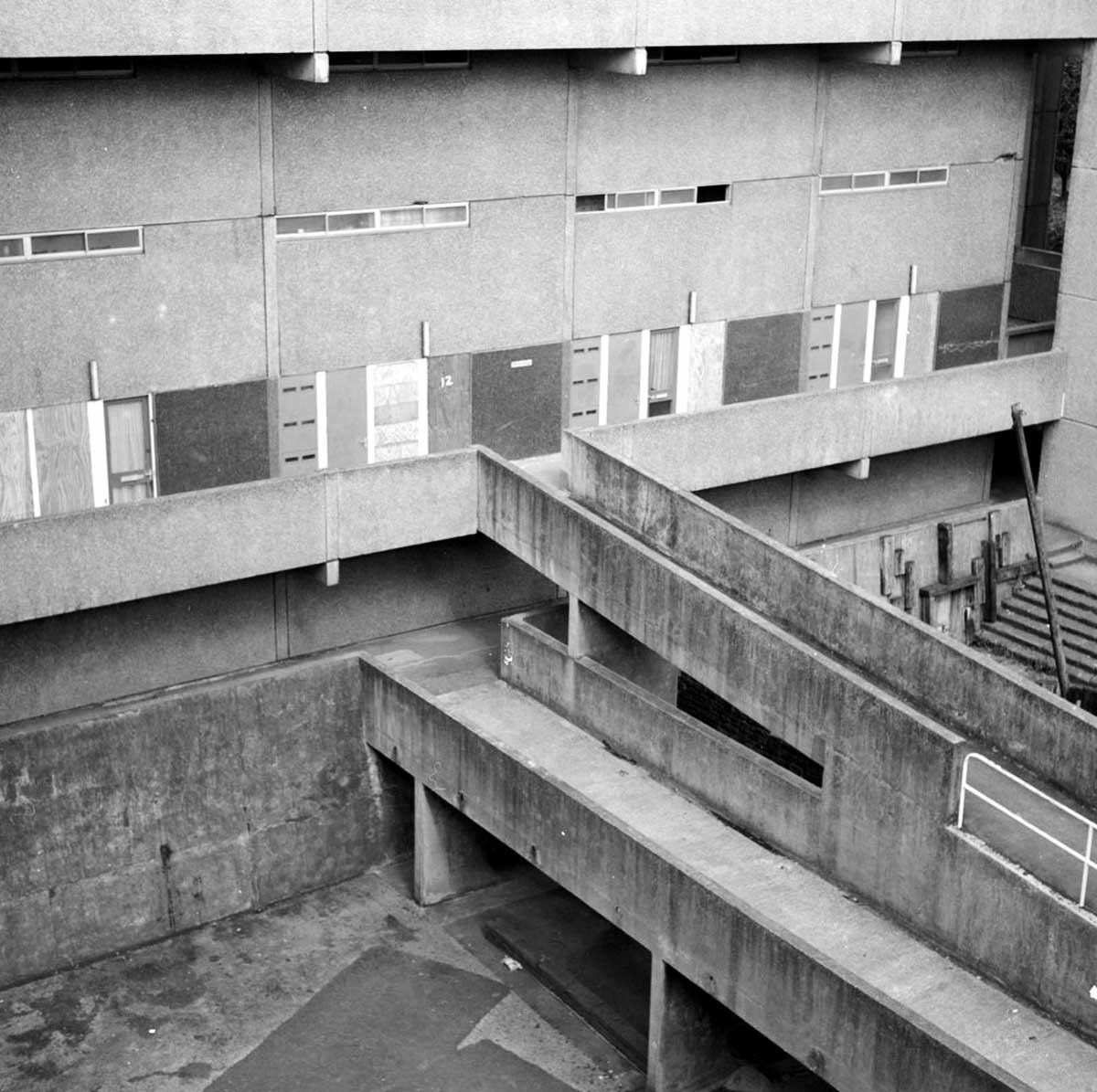 |
| Broomhall Flats towards the end. At the time of the photograph most of the homes were empty and boarded up but a few residents remained. The sound of footsteps echoing round the largely deserted building was spooky. |
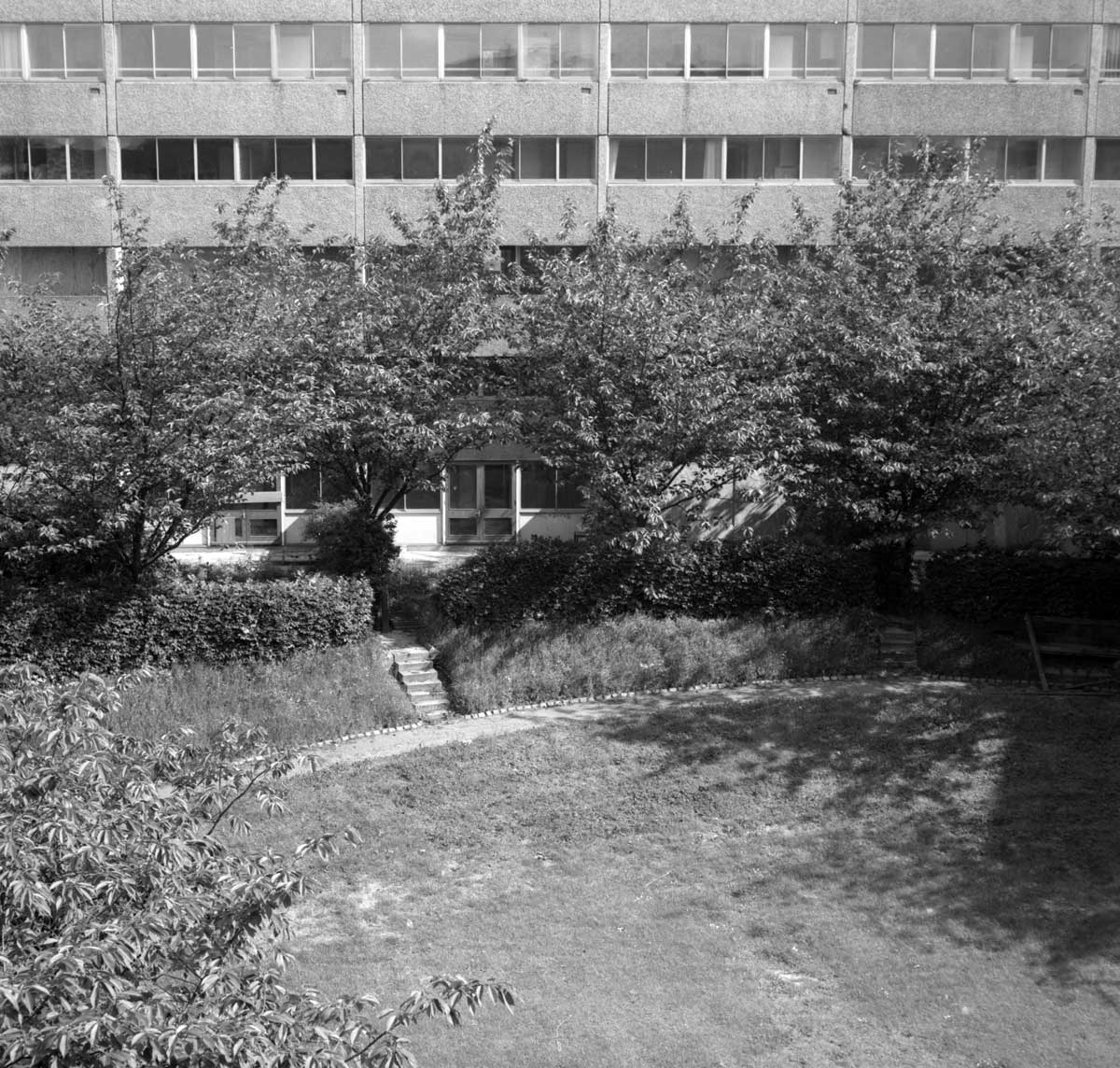 |
| The outdoor spaces were grassed and planted but were neglected by the end. |
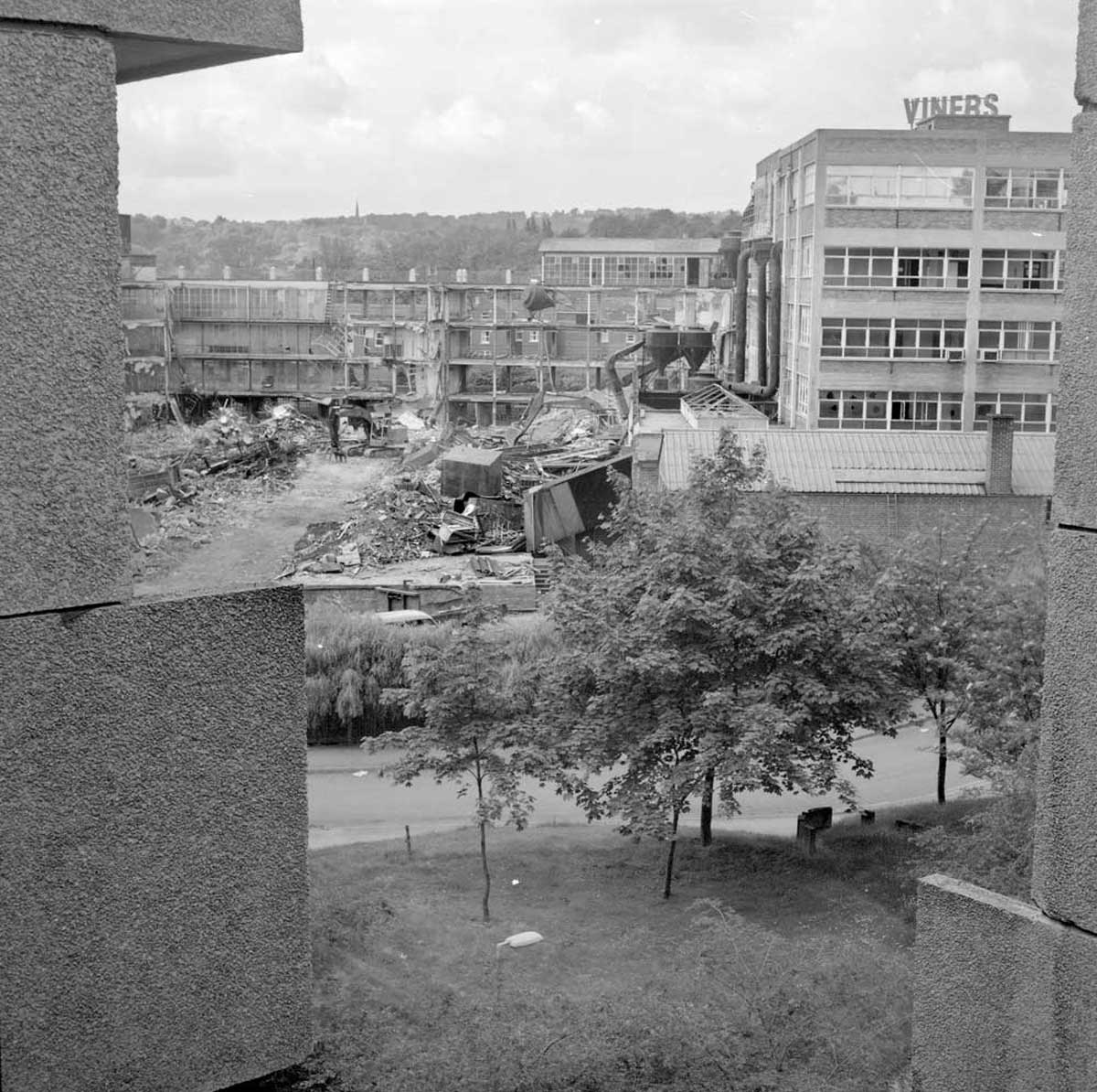 |
| Looking from Broomhall Flats to the Viners cutlery factory during demolition. The flats still had a few residents at this time. |
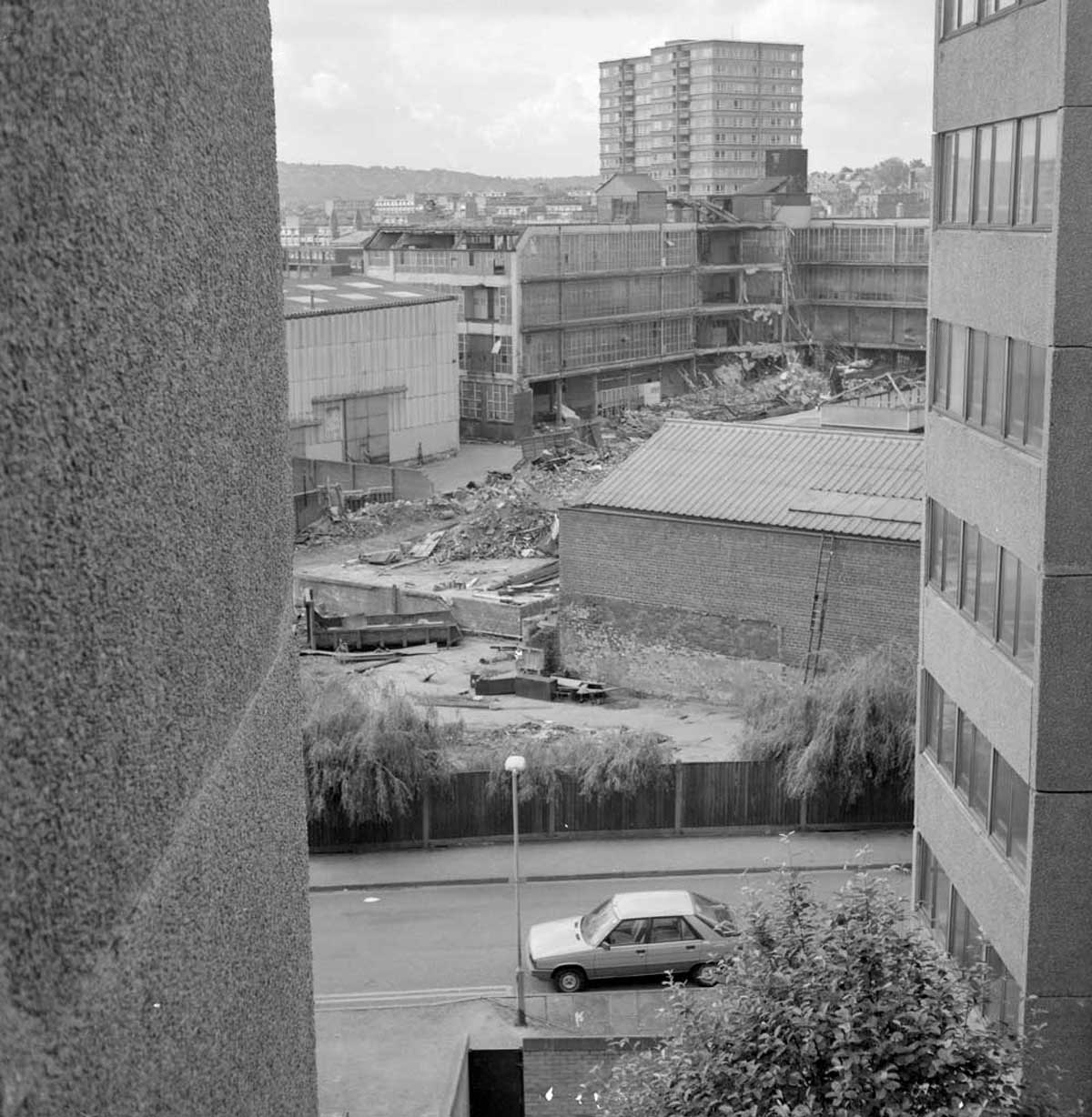 |
| Another view from the Flats. To the left of the factory remains is Stokes' tile warehouse, still standing in 2019. |
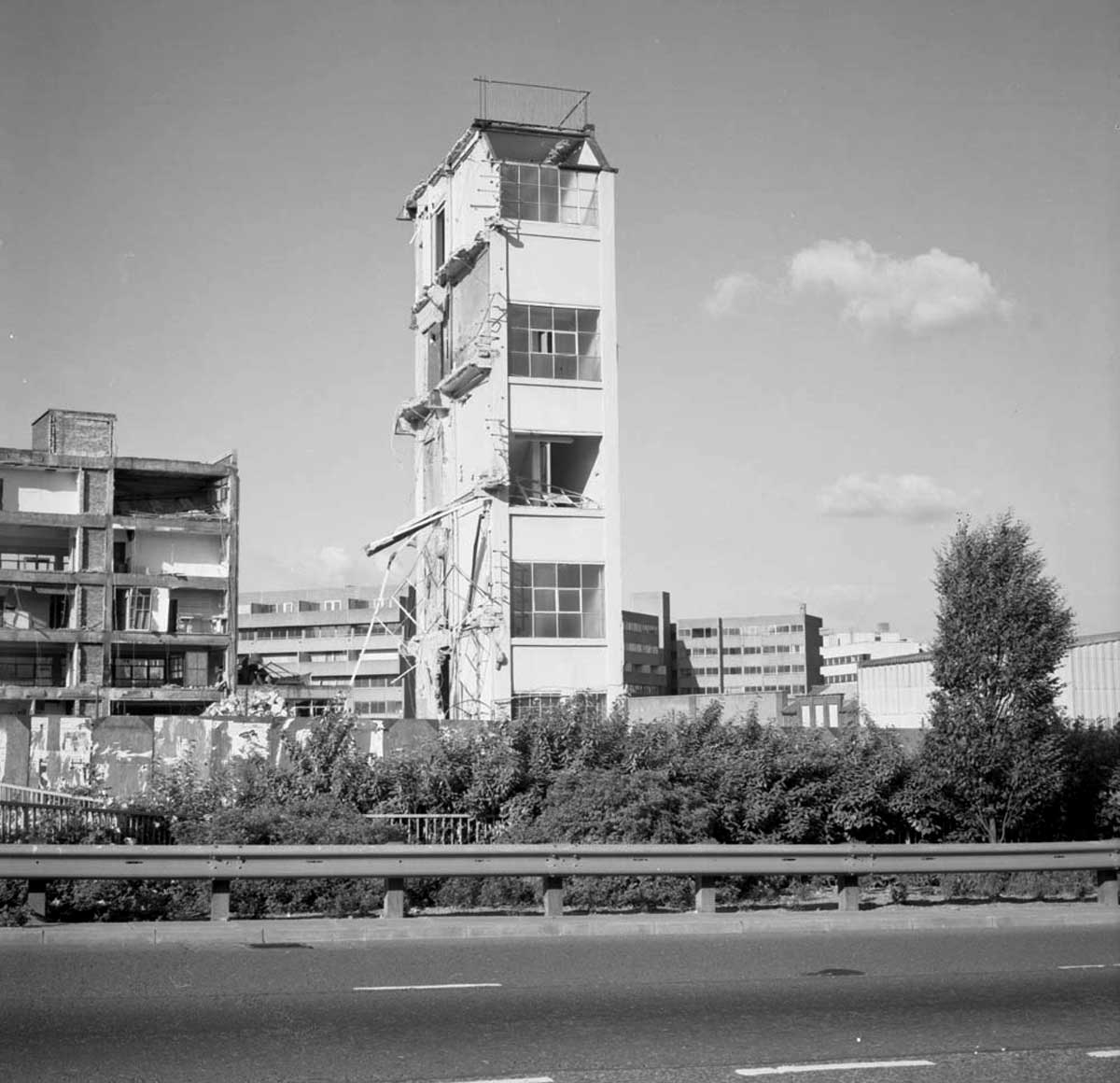 |
| The very last part of Viners factory waiting for the wrecking ball. In the background demolition of the Broomhall Flats is underway. |
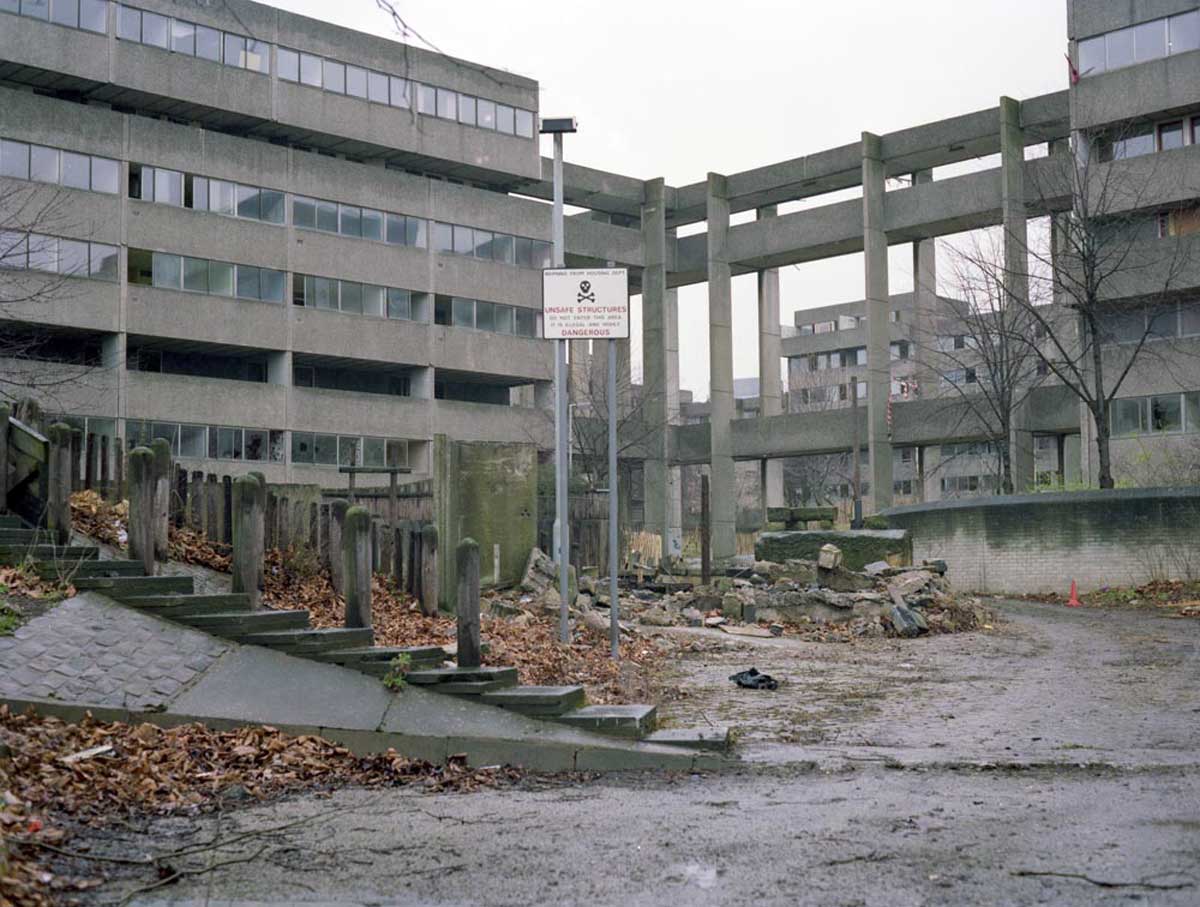 |
| The flats, empty, and with demolition underway elsewhere on the site. |
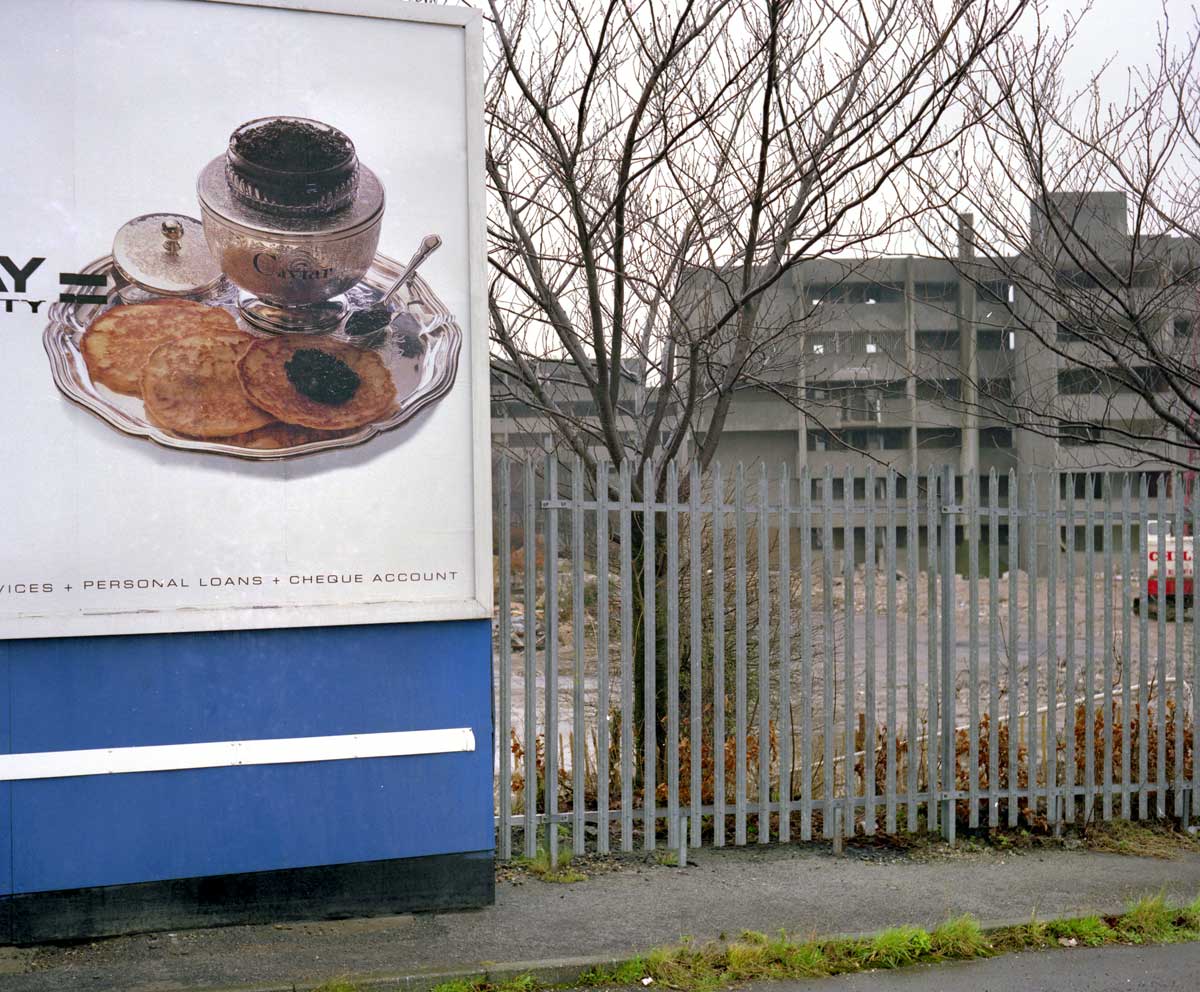 |
| Fenced off and with demolition well underway. As elsewhere, Sheffield Council was handicapped both by lack of revenue to carry out repairs to their housing stock and the Tory government 'Right to Buy' policy. |
*******
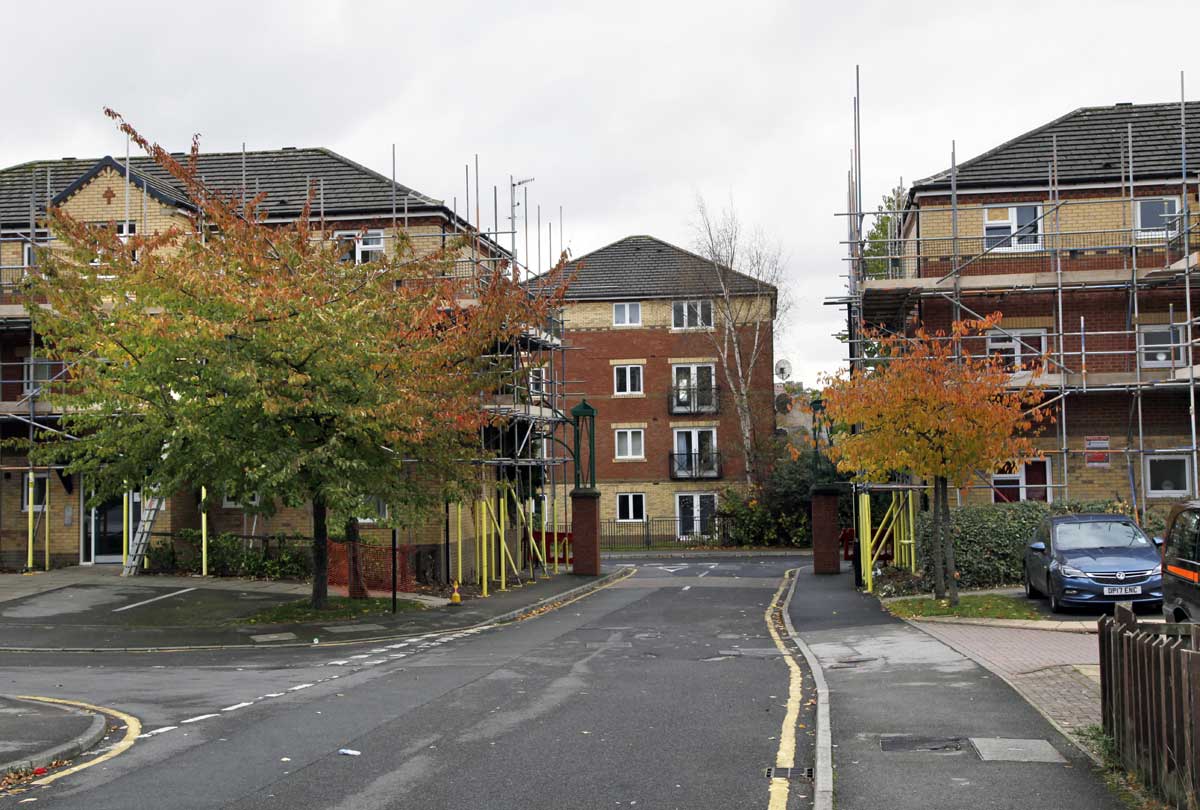 |
| Broomhall Estate in 2018. Built in the 1990s on the site of the Broomhall Flats it is a mixed tenancy development of approximately one third owner-occupiers and two thirds social landlords. |
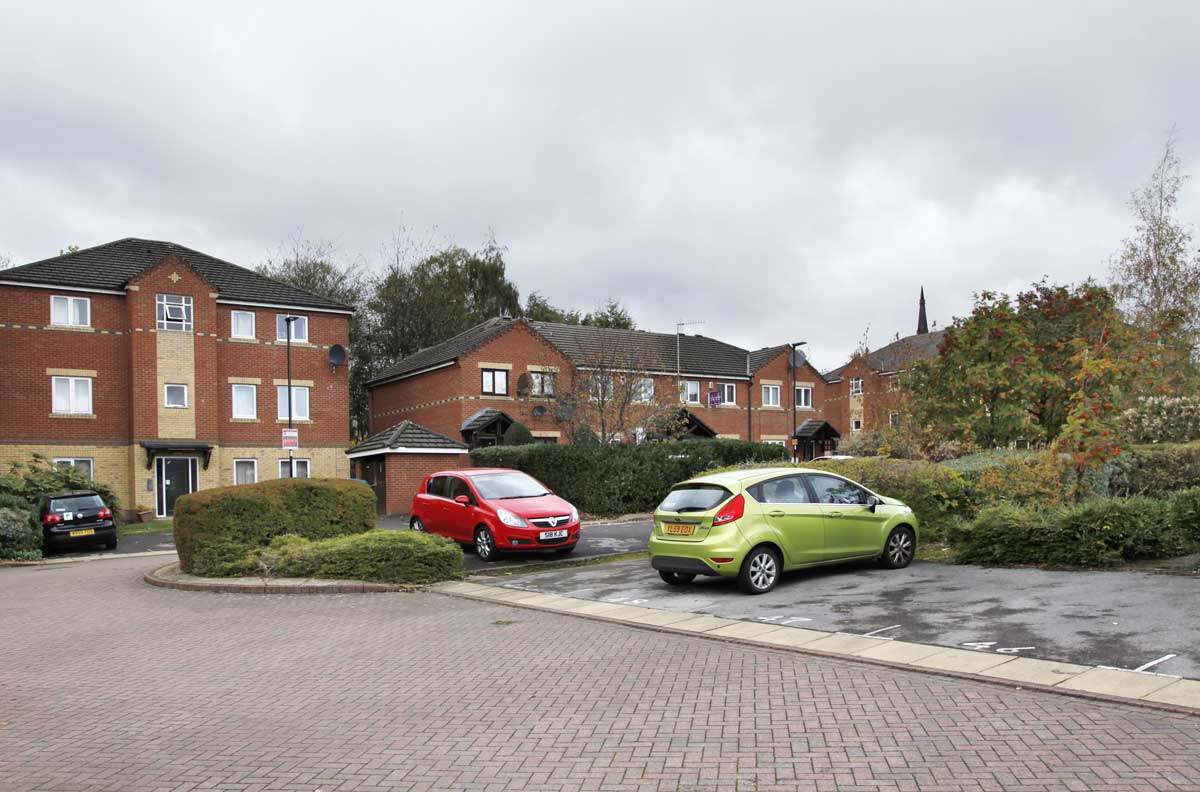 |
| Broomhall Estate 2018. |
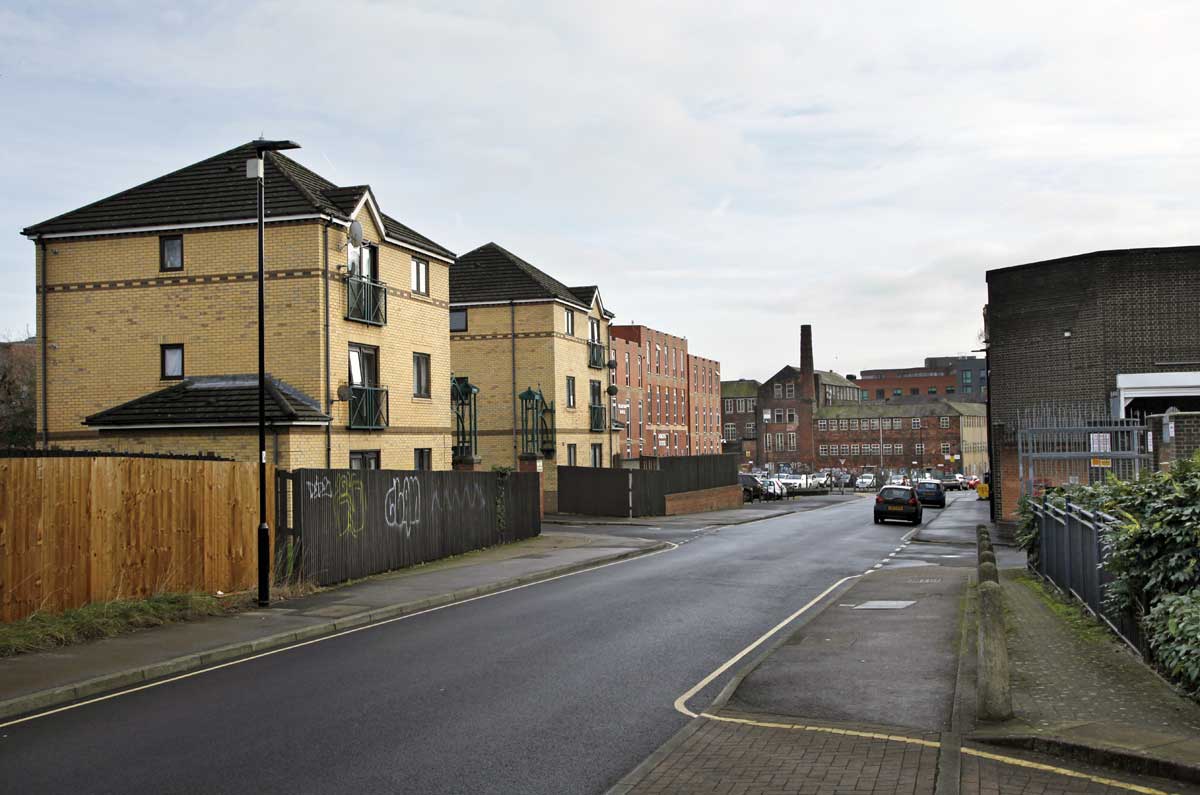 |
| The southern end of the Broomhall estate in 2019. The redbrick building on the left contains Domino House (student accommodation) named after the Domino pub which was built as part of the 1960s flats and which previously occupied the site. In the background is Ceylon Works/Eye Witness Works. |
*******
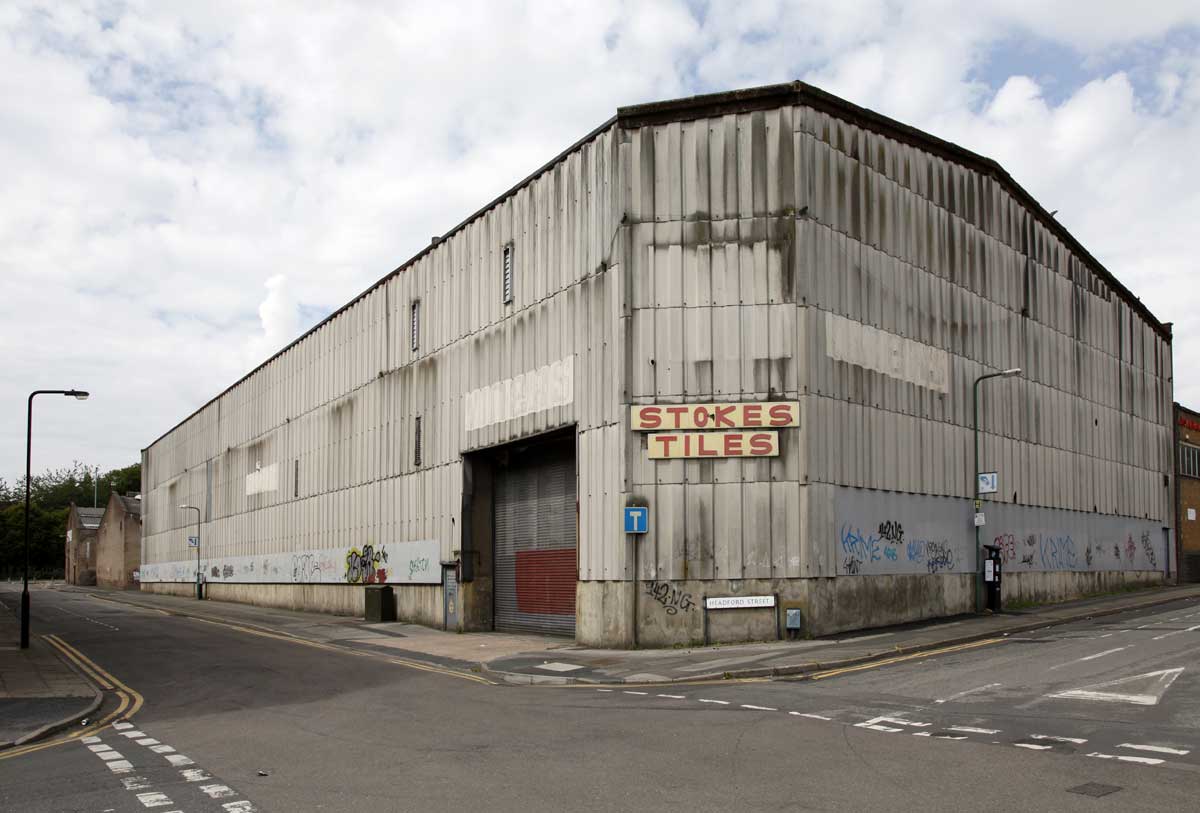 |
| Lacking elegance, maybe, but something of a local landmark the Stokes warehouse is due for demolition. |
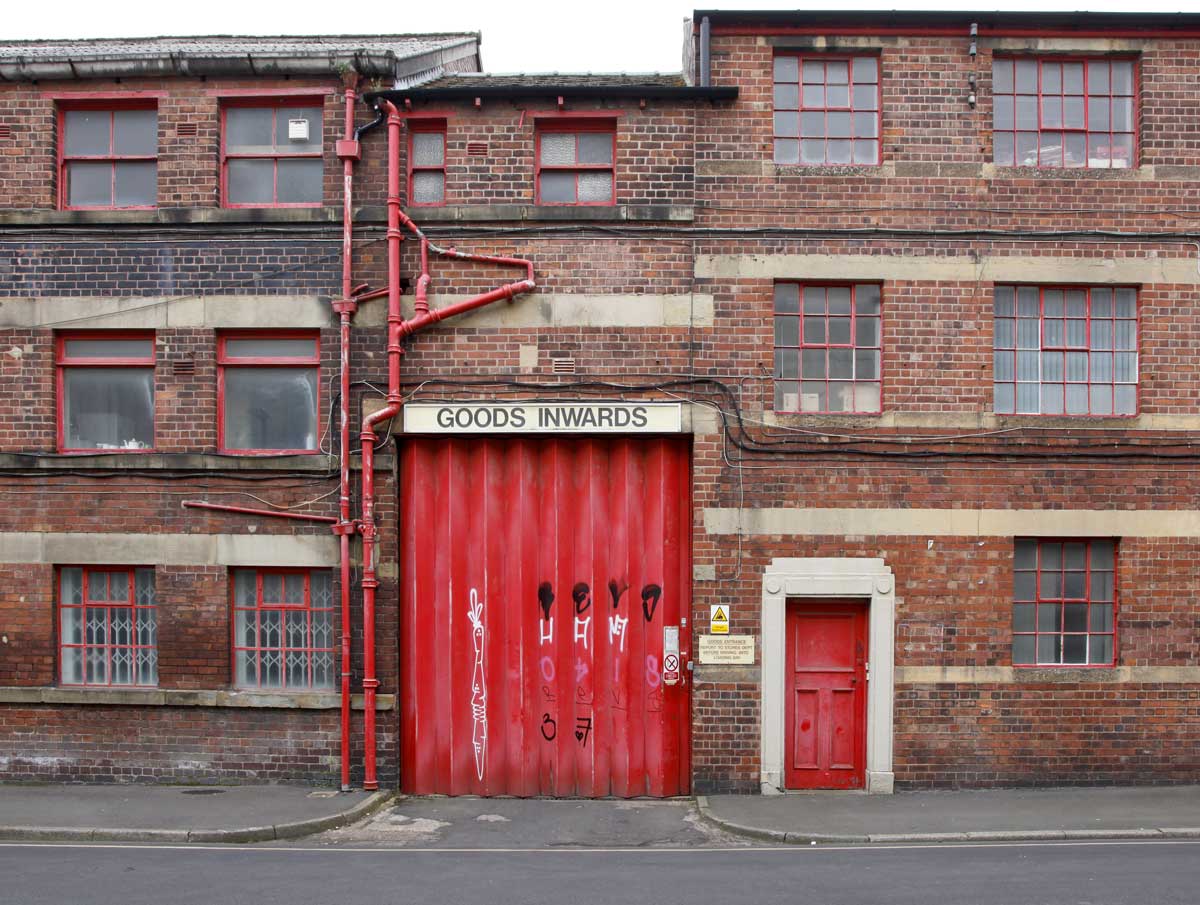 |
| The Pryor Marking factory |
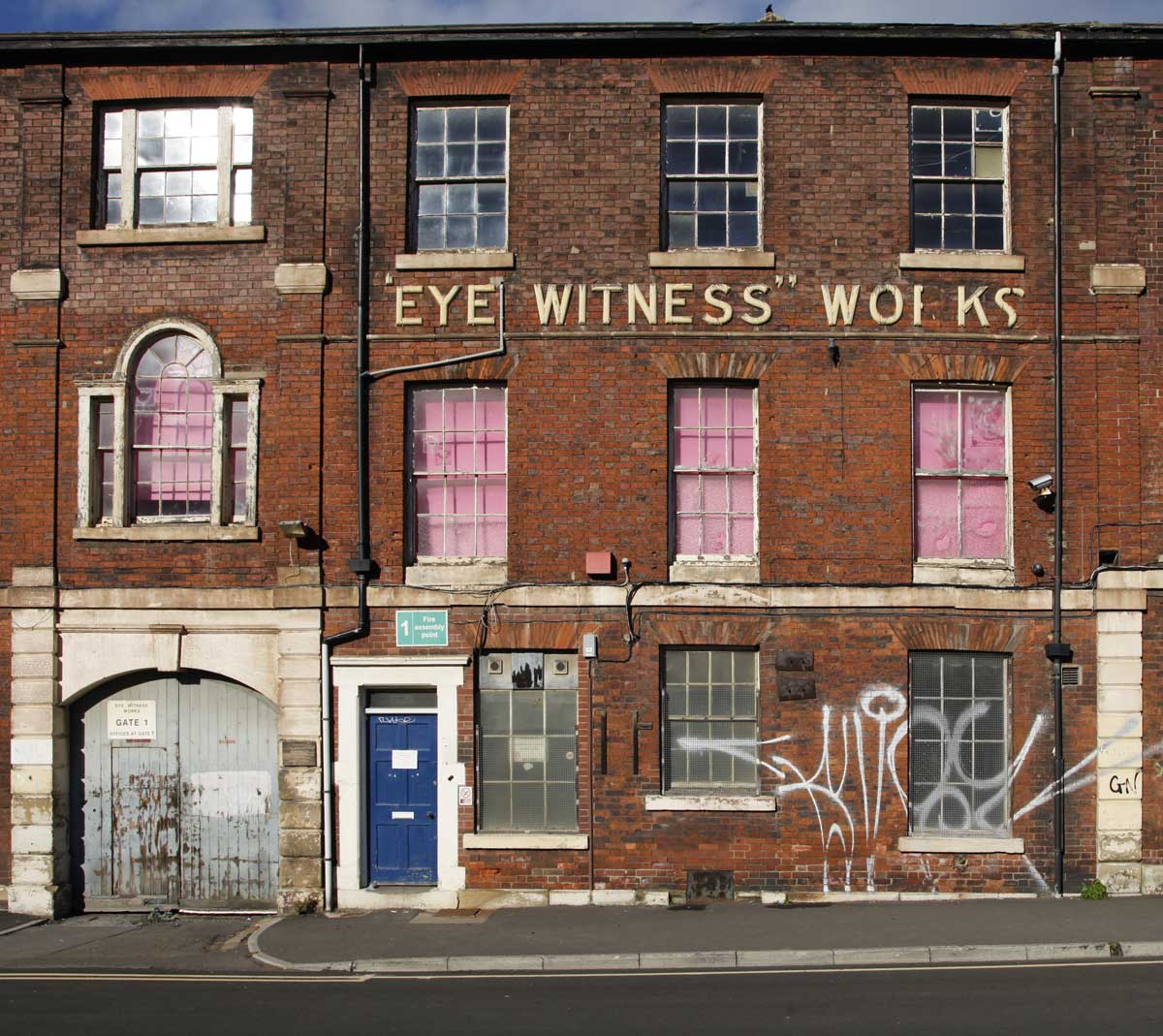 |
| Eye Witness Works awaiting the developers in 2018 |
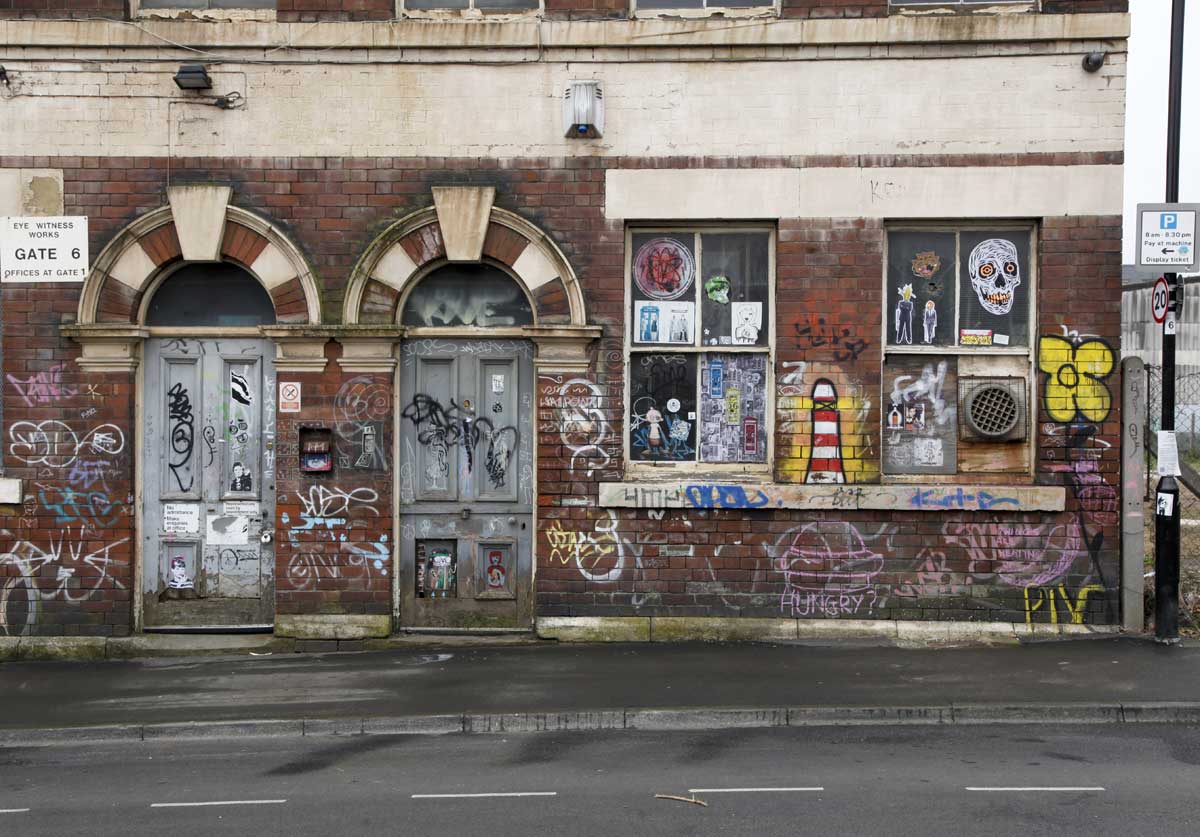 |
| The frontage of Ceylon Works in 2019. |
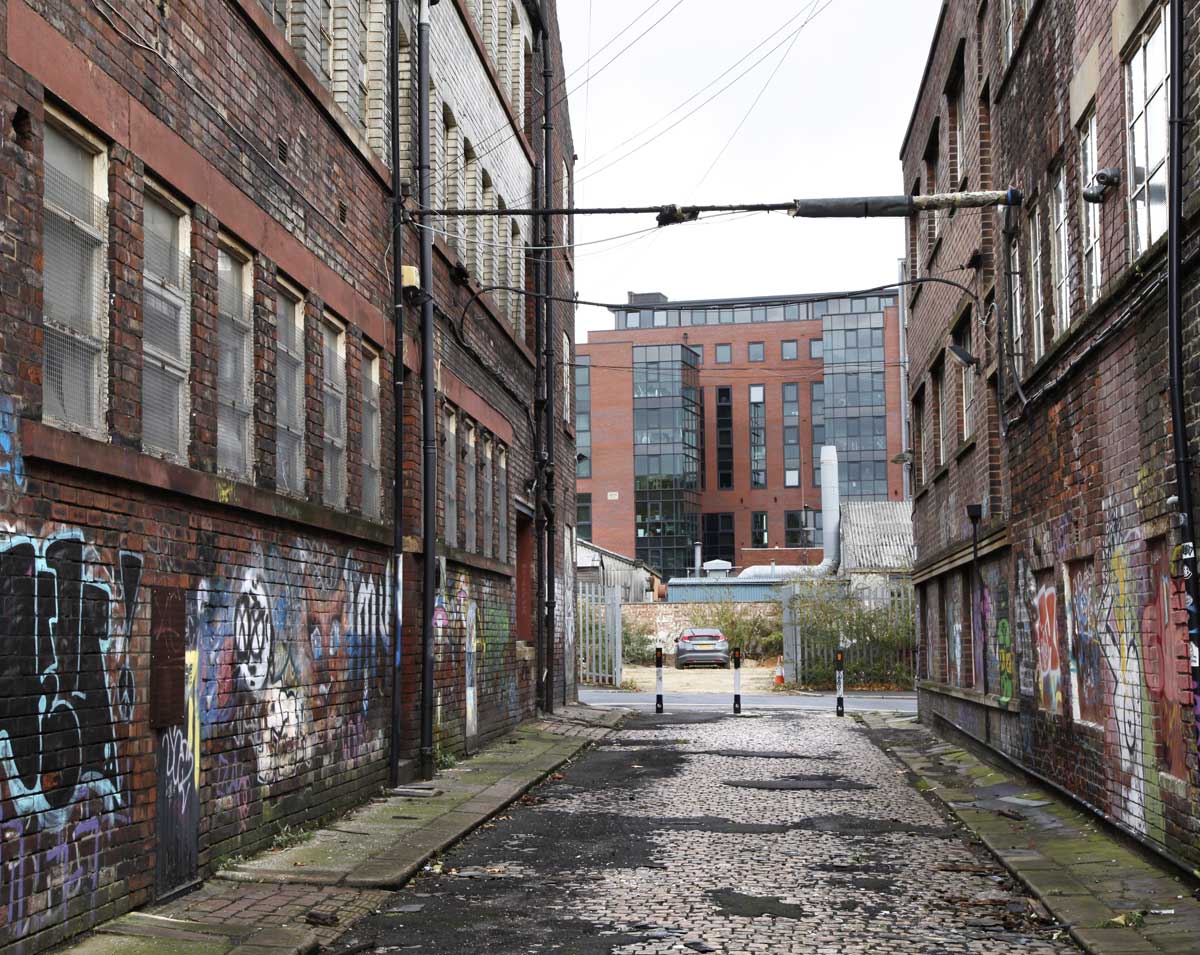 |
| Between Eye Witness Works and Ceylon Works looking east. 2018. |
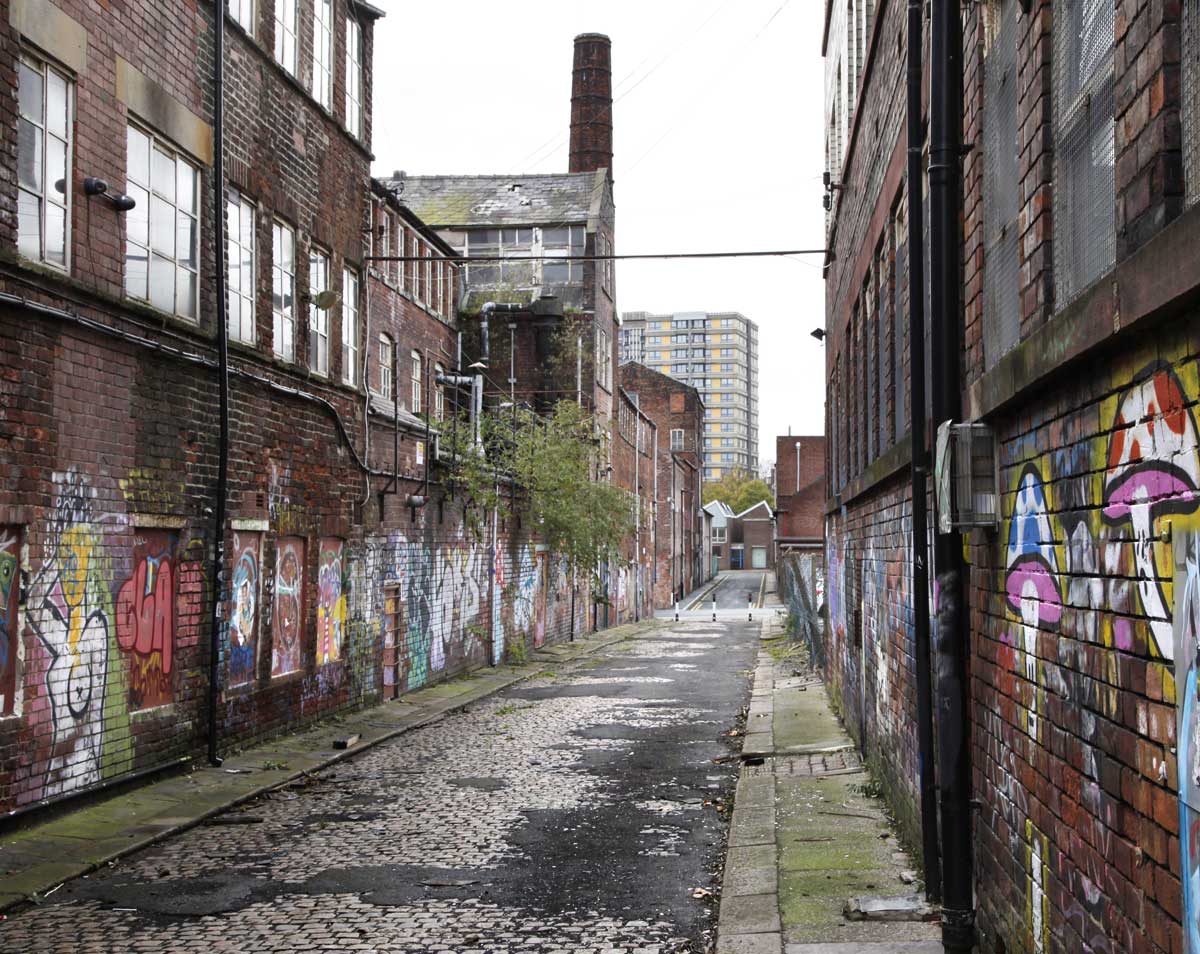 |
| Between Eye Witness Works and Ceylon Works looking west. 2018 |
The developers Capitol and Centric talk of retaining the buildings "original charm" where "residents can enjoy centuries-old features such as the 40ft chimney, 150-year-old pressing machines, Victorian safes, exposed brickwork and the impressive timber roof structure".
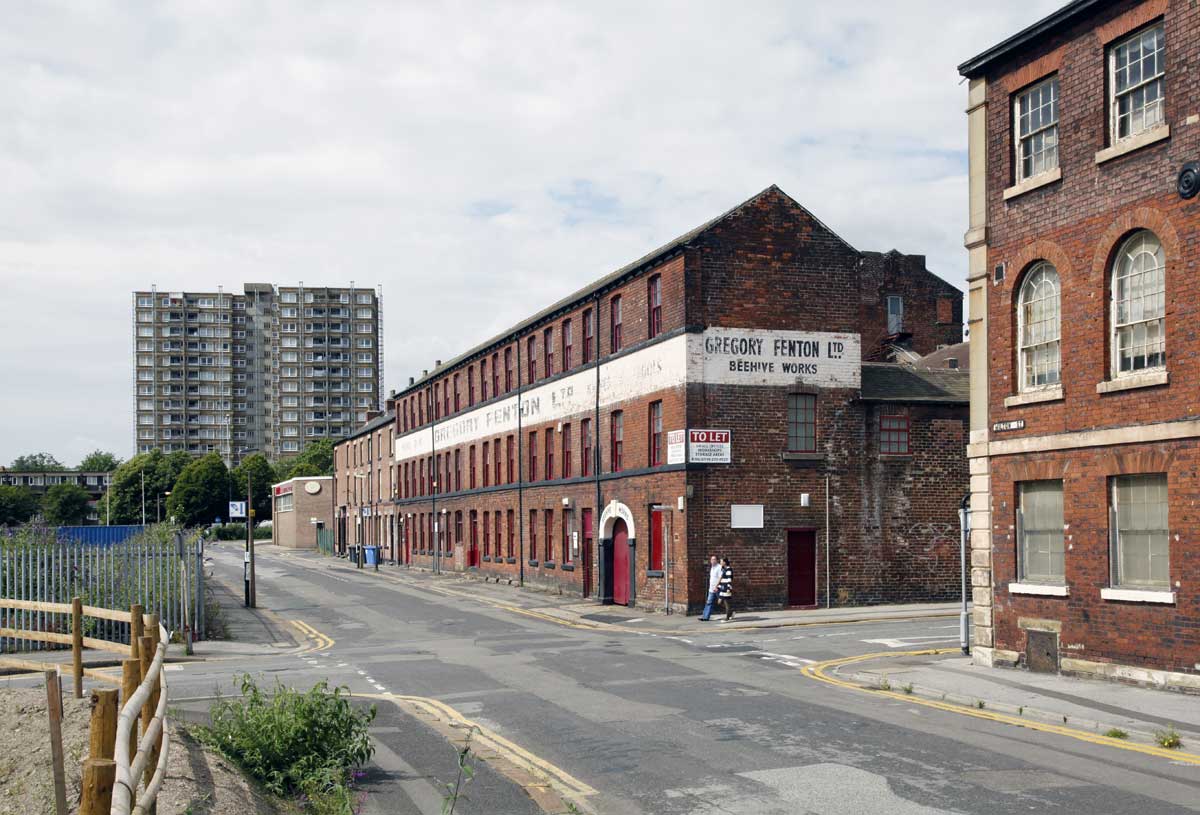 |
| Beehive Works with Eye Witness Works in the foreground. |
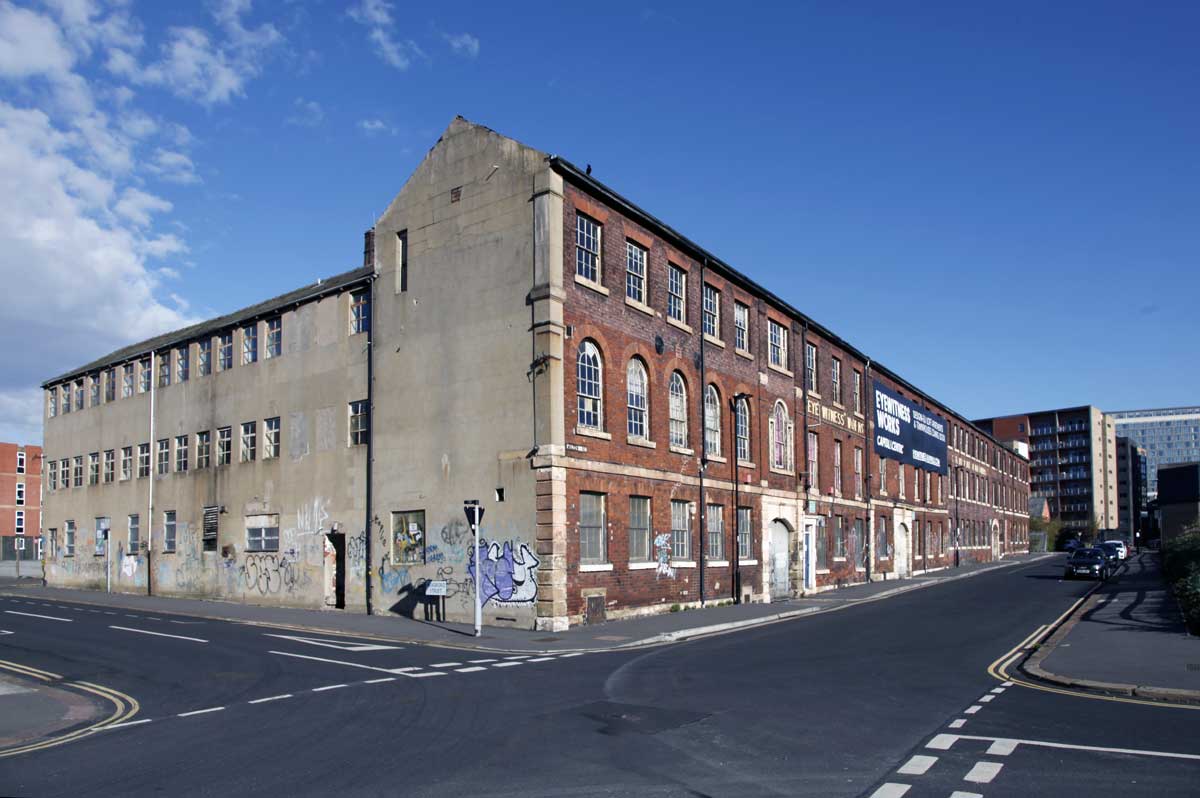 |
| Eye Witness Works 2018. |
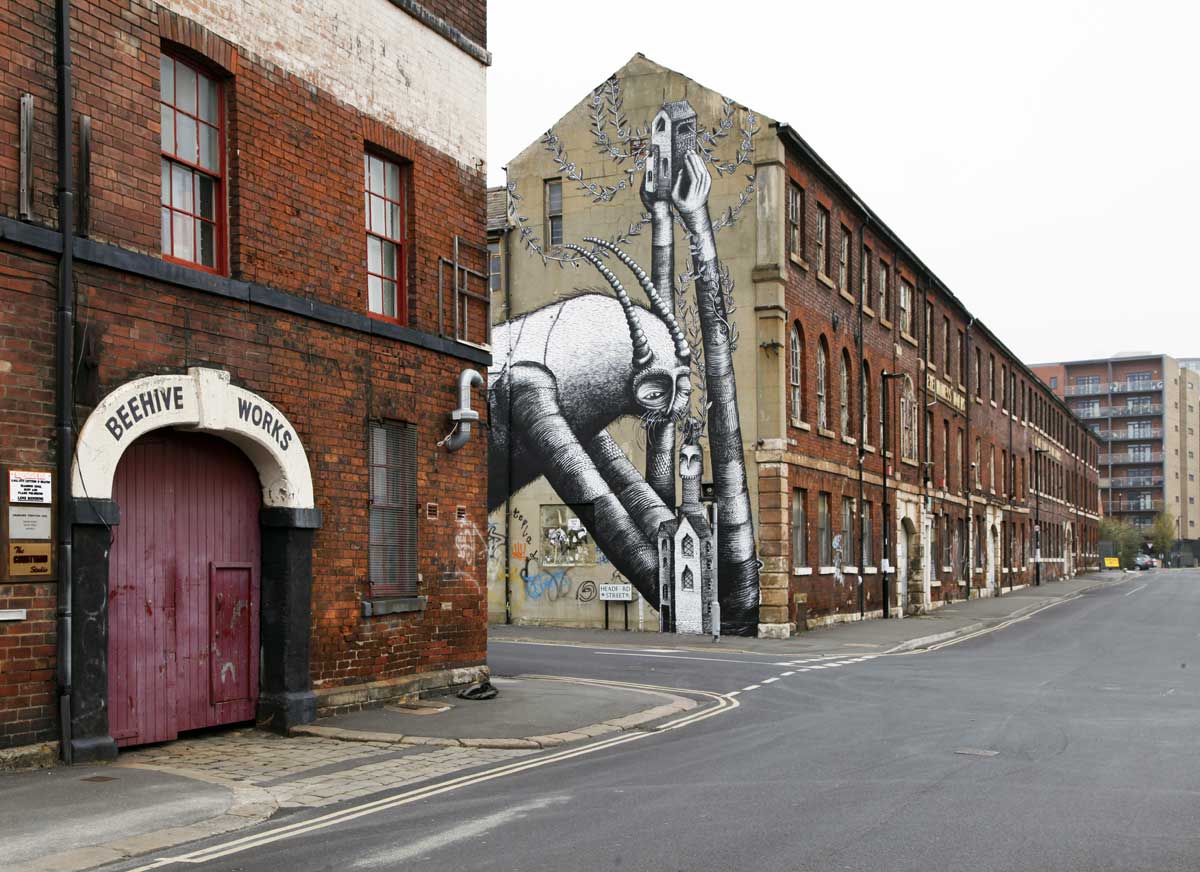 |
| Eye Witness Works in April 2019 after phlegm had added one of his trademark creature scenarios to the gable wall. |